
'80s Roulette: THE YEAR OF LIVING DANGEROUSLY
Mel Gibson and Sigourney Weaver give serious movie star heat in Peter Weir's international breakthrough hit.
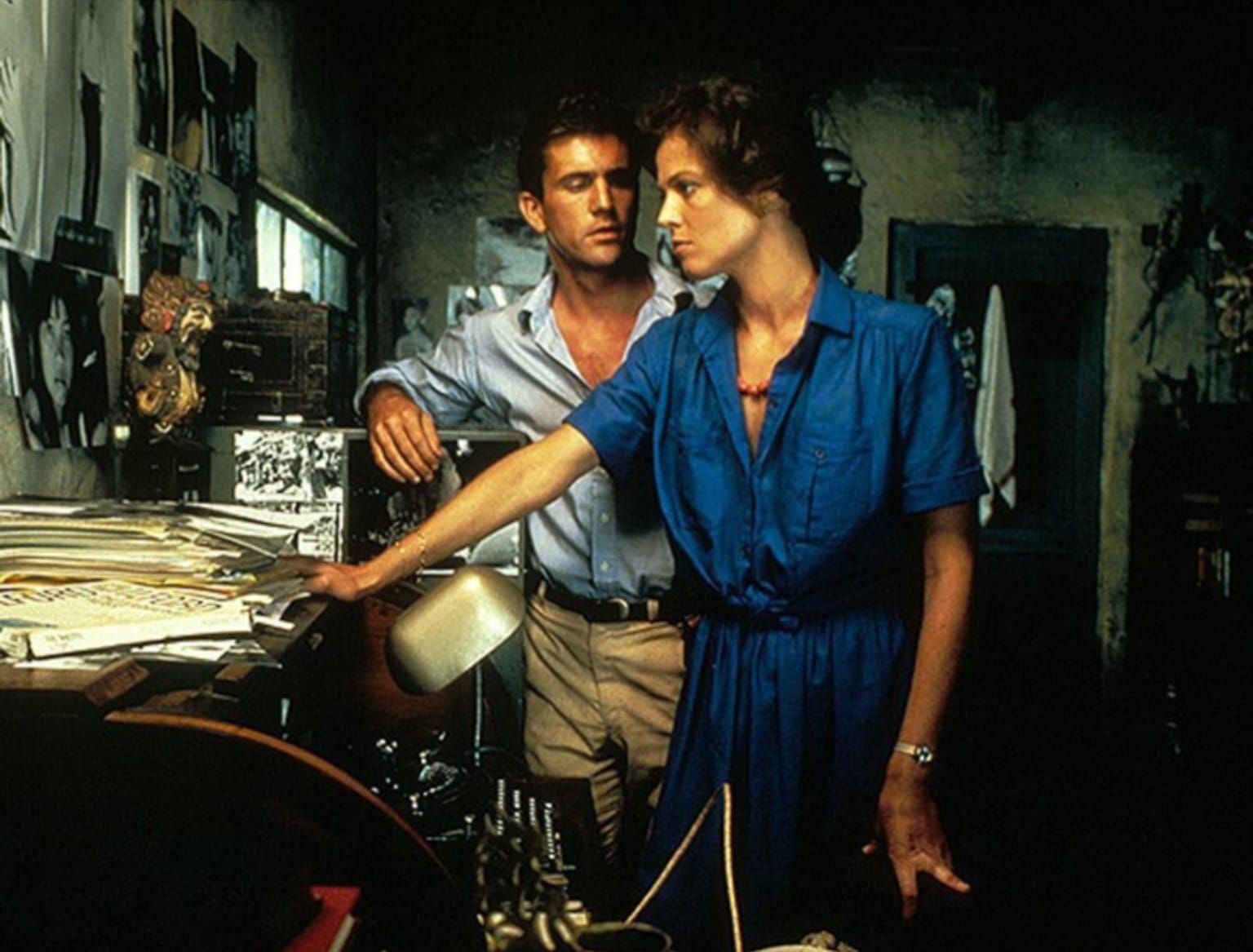
I have (almost) every single movie released in theaters in the ‘80s in the United States on a hard drive, and once a week, I’m going to hit shuffle and review whatever film comes up first.
Welcome to ‘80s Roulette!
FEBRUARY 11, 1983 (limited)
The Year of Living Dangerously
Linda Hunt, Mel Gibson, Bembol Roco, Domingo Landicho, Hermino De Guzman, Michael Murphy, Noel Ferrier, Paul Sonkkila, Ali Nur, Dominador Robridillo, Joel Agona, Mike Emperio, Bernardo Nacięła, Bill Kerr, Sigourney Weaver, Coco Marantha, Kuh Ledesma, Norma Uatuhan, Lito Tolentino, Cecily Polson, David Yang, Mark Egerton, Joonee Gamboa, Pudji Waseso, Joel Lamangan, Mario Layco, Jabo Djohansjan, Agoes Widjaya Soedjarwo, Chris Quivak
cinematography by Russell Boyd
music by Maurice Jarre
screenplay by David Williamson & Peter Weir & C.J. Koch
based on the novel by C.J. Koch
produced by James McElroy
directed by Peter Weir
Rated PG
1 hr 55 mins
A novice reporter assigned to cover Jakarta has to learn to navigate a dangerous landscape to write about the reign of President Sukarno.
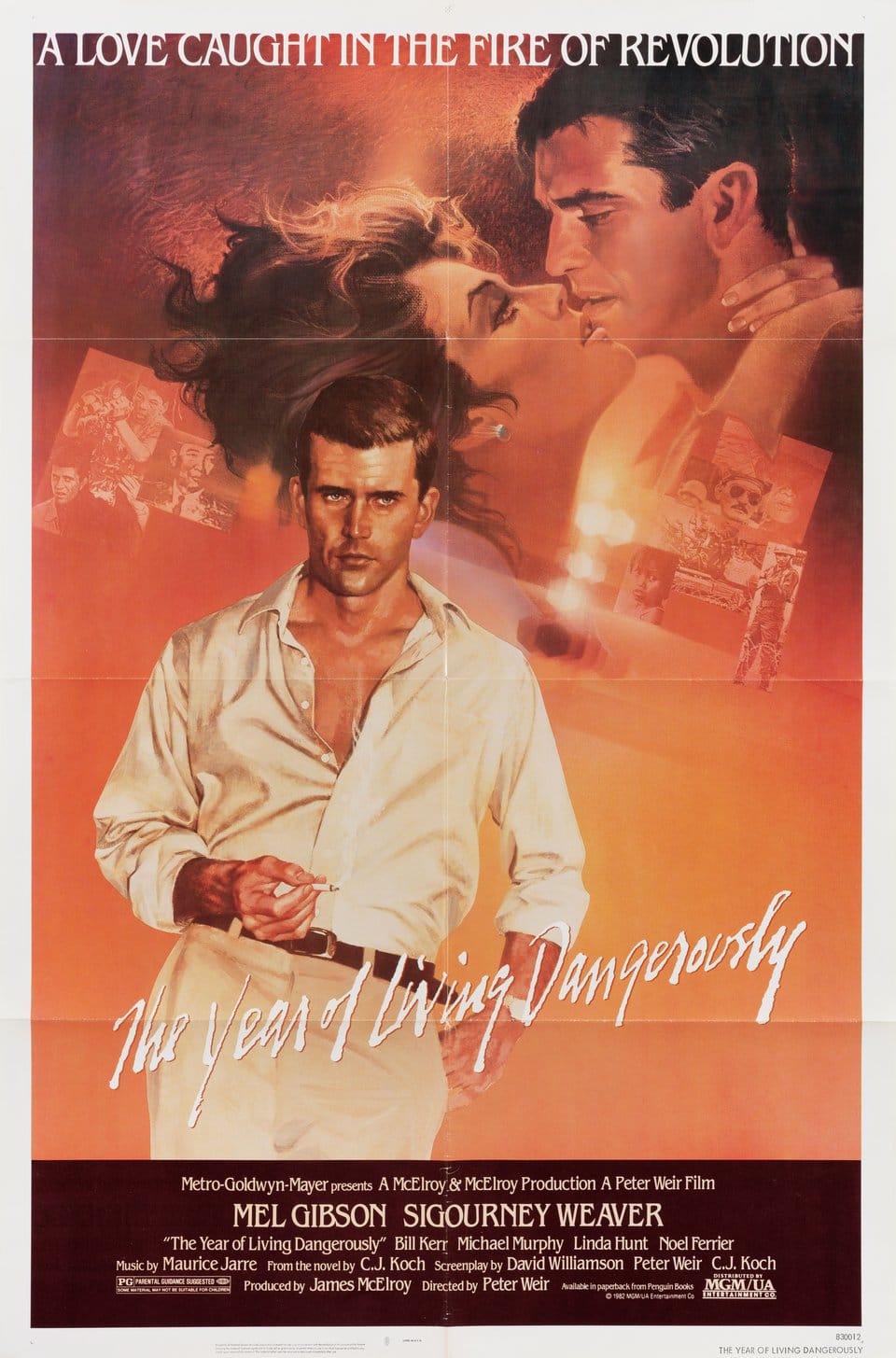
Peter Weir was ready for his moment, and so was Mel Gibson.
The Australian New Wave is one of those stories that you have to tell if you’re writing about the ‘70s and the early ‘80s, and it happened in stages. Many of the films took a while to make it to the US. Both Mad Max and The Road Warrior were released here later than they were in Australia. Cars That Ate Paris took two years, and Weir’s groundbreaking Picnic at Hanging Rock took even longer, with almost five years between its debut at home and its arrival on American screens. Mel Gibson was an obvious presence in everything he did, and even something like Tim got some juice out of his instant movie star charisma. Weir’s voice went through a real maturation between his early films and his international breakthrough, and he took some conscious steps towards making sure he had a real command of film vocabulary even after he made his first few films. Instead of coasting on a sense of style, he pushed himself to be able to tell any kind of story and in a variety of different modes.